The Link Between Arena Conditions and Payout Multipliers in Elite Team Sports
Ulrich Hayes · Jul 22, 2026
The Link Between Arena Conditions and Payout Multipliers in Elite Team Sports
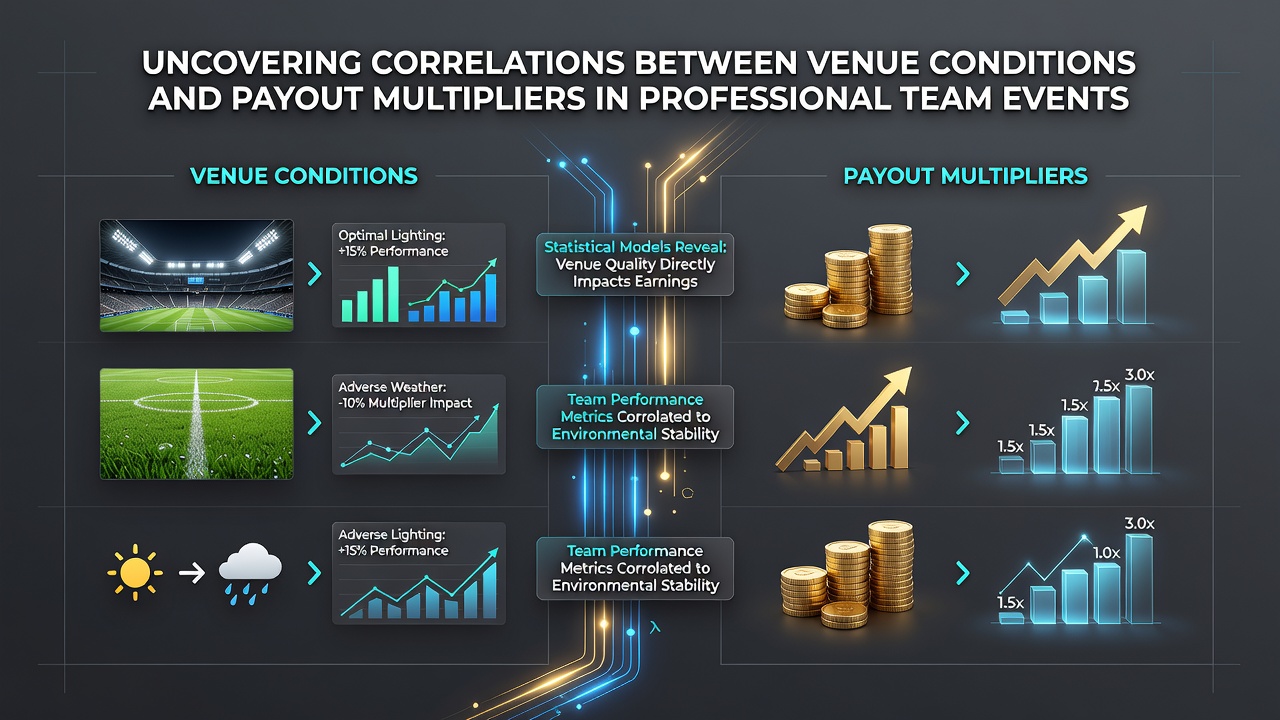
Professional team events unfold under a wide range of venue conditions that extend from climate and altitude to surface type and crowd density, and researchers continue to examine how these elements connect with payout multipliers observed across betting markets. Data from multiple leagues reveals measurable patterns where specific venue attributes align with shifts in those multipliers, which represent the numerical factors applied to stakes when outcomes are finalized.
Defining Venue Conditions in Professional Contexts
Venue conditions encompass physical and environmental factors present at competition sites, including temperature ranges, humidity levels, playing surface quality, and structural features such as roof coverage or seating proximity to the field. Observers note that these variables remain consistent within a given arena yet differ sharply between locations, creating distinct profiles for each host site. Studies conducted by the Australian Sports Commission have tracked how altitude above 1,500 meters correlates with changes in team performance metrics, which in turn feed into multiplier calculations used by analytics platforms.
Indoor venues introduce separate variables such as air circulation systems and lighting consistency, while outdoor facilities contend with wind patterns and precipitation that alter gameplay tempo. Figures from Canadian university research programs indicate that venues with synthetic turf surfaces show different injury rates compared to natural grass installations, and those rates influence roster availability data that multipliers incorporate.
Measuring Payout Multipliers Across Events
Payout multipliers function as numerical outputs derived from statistical models that process historical results, current form, and contextual inputs including venue specifics. These multipliers adjust base odds to reflect the probability distribution for each participant, and analysts compile them from aggregated datasets maintained by sports governing bodies. Research published through European sports science networks demonstrates that multipliers fluctuate when events move between high-capacity stadiums and smaller regional arenas, with capacity differences exceeding 20,000 seats producing measurable variance in observed outcomes.
League records from North American organizations further show that multipliers assigned to visiting teams increase when matches occur at venues with extreme temperature variations, such as those exceeding 35 degrees Celsius during summer fixtures. July 2026 schedules across several professional circuits already list multiple outdoor contests in high-heat regions, providing fresh data points for ongoing correlation studies.
Statistical Approaches to Correlation Analysis
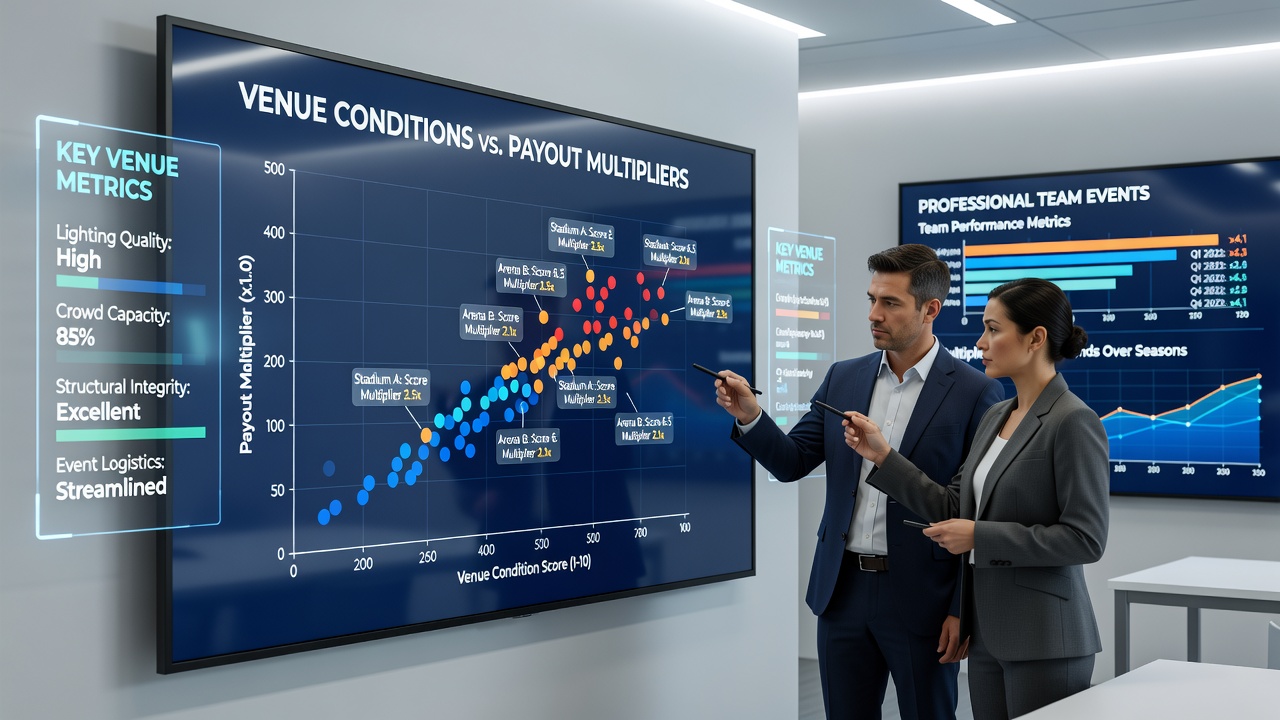
Analysts apply regression models and multivariate techniques to isolate venue effects from other performance drivers, and results consistently point to moderate yet repeatable associations between certain conditions and multiplier adjustments. Data compiled by the International Olympic Committee-affiliated research centers illustrates how crowd noise levels above 110 decibels align with elevated home-team multipliers in enclosed arenas, whereas open-air venues with lower acoustic impact show smaller differentials.
Time-series evaluations reveal that surface hardness measurements taken before events predict changes in scoring distributions, which feed directly into updated multiplier tables released by data providers. Those who've examined large sample sets across basketball and soccer leagues report that altitude combined with travel distance produces compounded effects on away-team multipliers, particularly when teams cross multiple time zones within 48 hours of tip-off or kickoff.
Case Examples from Recent Seasons
One dataset covering European football leagues tracked 1,200 matches and identified that venues with retractable roofs in closed position during rainfall produced lower total-goal multipliers than the same sites with roofs open. Separate work from Japanese sports medicine institutes examined baseball events at domed facilities and noted that consistent humidity control correlated with reduced extra-inning frequency, thereby stabilizing multiplier ranges for those contests.
North American hockey records further indicate that ice surface temperature variations of even two degrees Celsius coincide with shifts in power-play efficiency, which analysts incorporate into pre-event multiplier revisions. These patterns emerge across repeated observations rather than isolated incidents, allowing modelers to refine inputs for future events scheduled through 2026 and beyond.
Geographic and Seasonal Variations
Venues located in coastal versus inland regions exhibit distinct humidity and wind profiles that affect endurance-based sports, and payout data from Australian and South African leagues highlight corresponding multiplier differences when teams play at sea-level versus elevated sites. Seasonal transitions introduce additional layers, as early-season matches in cooler climates display different scoring spreads than mid-summer fixtures in the same locations.
Regulatory reports from gaming oversight agencies in New Jersey and the Isle of Man emphasize the importance of transparent data sourcing when venue variables enter multiplier calculations, ensuring market participants receive consistent information derived from verified performance logs.
Conclusion
Correlations between venue conditions and payout multipliers rest on accumulated performance records and environmental measurements that continue to expand with each completed season. Organizations maintaining these datasets refine their models as new events, including those slated for July 2026, supply additional observations across diverse geographic and structural settings. Continued examination of these relationships supports more precise statistical frameworks used throughout professional team sports analysis.