Overround Dynamics in Multi-Way Markets: Precision Through Mathematical Scrutiny
Theo Powell · Jun 26, 2026
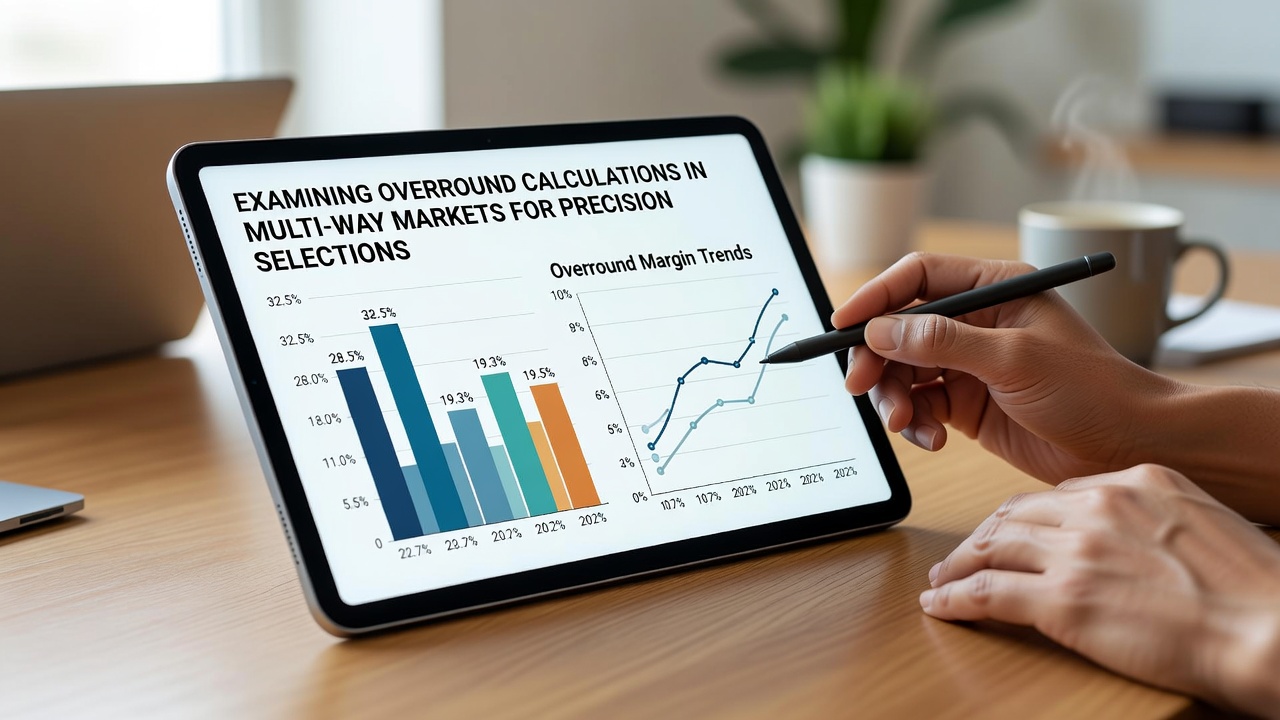
Overround Dynamics in Multi-Way Markets: Precision Through Mathematical Scrutiny
Multi-way markets present bookmakers with opportunities to distribute risk across numerous outcomes, yet they also require precise overround management to maintain profitability while offering competitive odds, and observers note that these calculations become especially critical when events feature four or more possible results such as tennis matches with set handicaps or political elections with multiple candidates.
Core Principles of Overround in Expanded Markets
Overround represents the aggregate margin embedded within quoted odds, calculated by converting each price into an implied probability and summing those values, which inevitably exceeds 100 percent to generate the house edge, while data from various regulatory bodies shows that this excess typically ranges between 2 and 8 percent depending on market liquidity and competition levels.
Researchers at institutions tracking international wagering patterns have documented how multi-way formats amplify the complexity because each additional outcome dilutes individual probabilities yet demands careful recalibration to prevent the total implied probability from ballooning beyond sustainable thresholds, and analysts at the Responsible Gambling Council in Canada have examined these structures in depth through longitudinal studies spanning multiple jurisdictions.
Calculation Methods for Multi-Way Scenarios
Precision begins with converting decimal odds into probabilities using the formula of one divided by the odds figure, after which all resulting percentages are added together and the surplus above 100 percent constitutes the overround, whereas practitioners in high-volume environments often apply normalization techniques that redistribute the margin proportionally across outcomes to achieve balanced pricing without distorting individual selections.
Take one quantitative analyst who examined Grand Slam tennis markets in 2025 and discovered that four-way handicap lines frequently carried overrounds of 4.2 percent when unadjusted, yet after proportional scaling the effective margin aligned more closely with three-way equivalents while preserving value detection opportunities for informed bettors, and similar patterns emerged in European election betting where five-candidate fields required iterative adjustments to avoid overexposure on frontrunners.

Application to Precision Selections
Those who study betting efficiency emphasize that identifying underpriced outcomes hinges on comparing normalized implied probabilities against independent assessments derived from statistical models or historical datasets, and this process gains accuracy when overround figures are isolated first because raw odds otherwise embed hidden biases that skew perceived value, while June 2026 reports from the Australian Gambling Research Centre indicated rising adoption of algorithmic tools among professional syndicates precisely for dissecting these multi-way margins in real time.
What's notable is how certain exchanges and fixed-odds operators now publish granular margin disclosures that allow cross-market comparisons, enabling selectors to target events where the overround sits below sector averages and thereby improve long-term return metrics, yet the same figures also reveal that low-liquidity multi-way propositions can carry inflated margins exceeding 7 percent which demand stricter filtering before any position is taken.
Regional Variations and Data Trends
Regulatory environments influence how overrounds manifest because different licensing regimes impose varying transparency requirements, and evidence compiled by the Nevada Gaming Control Board demonstrates tighter clustering of margins in American sportsbooks compared with some offshore platforms that accommodate wider spreads across exotic multi-way propositions, whereas parallel findings from European academic consortia highlight seasonal spikes during major tournaments when bookmakers adjust pricing to capture increased volume.
People who track these metrics across platforms often discover that arbitrage opportunities surface most reliably in markets with four to six outcomes because the mathematical dispersion allows for occasional misalignments that sophisticated models can exploit, and industry reports from 2026 continue to show gradual compression of average overrounds as competition intensifies and technology facilitates faster repricing cycles.
Conclusion
Overround calculations in multi-way markets serve as foundational tools for evaluating the fairness and potential value within quoted prices, and continued refinement of these methods supports more accurate selection processes across diverse betting environments, while ongoing data collection from regulatory and research entities around the world provides the empirical basis for ongoing improvements in market analysis techniques.