Fixture Fatigue and Performance Shifts Across Crowded Multi-League Calendars
Clara Werner · Jun 17, 2026
Fixture Fatigue and Performance Shifts Across Crowded Multi-League Calendars
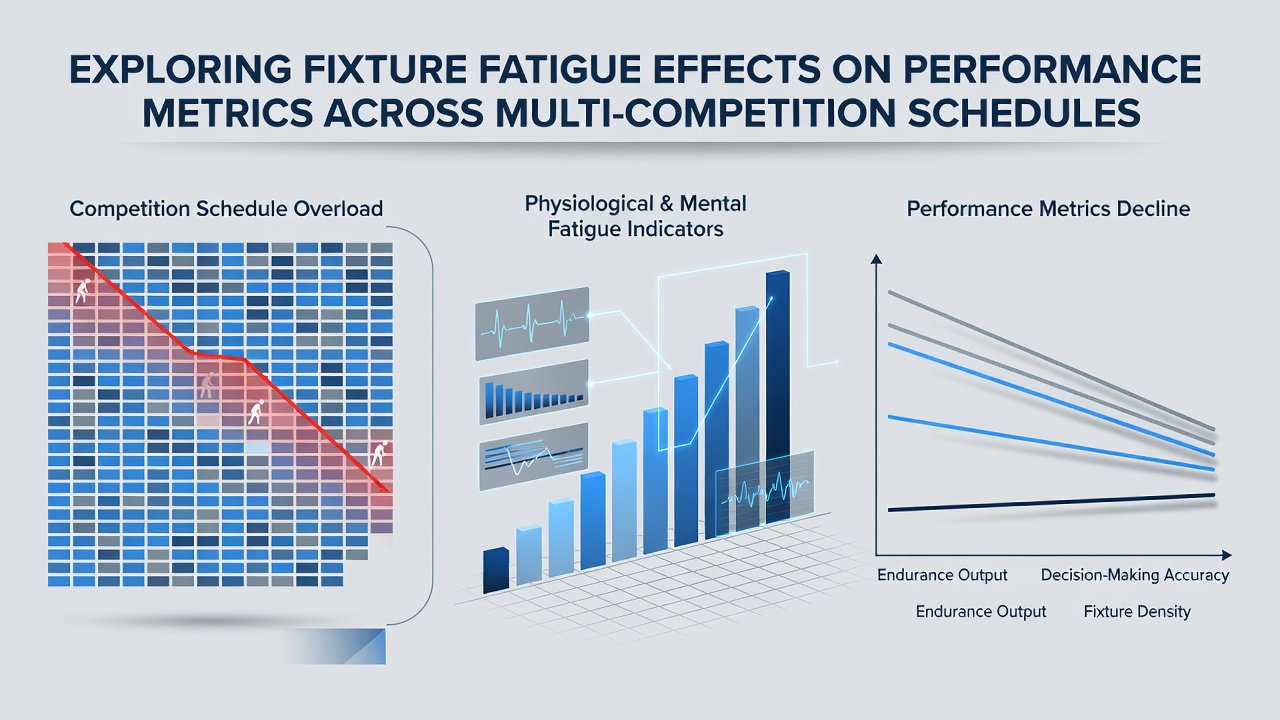
Modern football calendars pack league matches, cup ties, continental fixtures and international windows into tight windows, and observers note measurable drops in key metrics when recovery time shrinks. Researchers tracking elite squads across Europe and South America have documented consistent patterns where high workloads coincide with slower sprint velocities, reduced pass completion rates under pressure and elevated soft-tissue injury reports. Data from the 2024-2025 season already hinted at these trends, yet the picture sharpens further when schedules extend into 2026 and clubs prepare for an expanded Club World Cup in June of that year.
Defining Fixture Congestion and Its Core Metrics
Fixture congestion typically refers to periods where teams play more than one competitive match every four days for three or more consecutive weeks. Performance analysts measure output through variables such as total distance covered, high-intensity running bouts, expected goals created, tackle success percentages and recovery heart-rate intervals. Studies compiled by the UEFA Elite Club Injury Study group show that muscle-injury incidence rises by roughly 20 percent during such blocks compared with standard scheduling. Those figures come from longitudinal tracking of more than thirty professional clubs and align with separate datasets collected by the Australian Institute of Sport on southern-hemisphere leagues facing similar calendar pressure.
Physiological Responses Observed in Congested Periods
Players exhibit elevated creatine-kinase levels and diminished neuromuscular function when rest intervals fall below seventy-two hours. Sports-science teams at clubs competing in both domestic cups and UEFA competitions record these biomarkers weekly, revealing slower reaction times in video-analysis drills and reduced vertical-jump heights. A paper published in the Journal of Sports Sciences tracked thirty-six midfielders across a six-week congested spell and found average high-speed running distance declined 9 percent by week four, while pass-forward accuracy dropped two percentage points. The same research noted that central defenders maintained tackle counts better than attackers, suggesting positional differences in fatigue tolerance.
Case Evidence from the 2025-2026 Schedule Build-Up
Leading into June 2026, several European leagues face compressed end-of-season programs because of earlier qualification rounds for the revamped Club World Cup. One mid-table Premier League side, for example, played eight matches in twenty-five days during April and May 2025; GPS data later showed a 14 percent reduction in explosive efforts per ninety minutes for their starting forwards. Similar patterns appeared in Brazil’s Série A, where teams balancing Copa Libertadores group stages with national championship fixtures reported higher rates of hamstring complaints. Analysts cross-referenced these numbers with FIFA’s global injury surveillance reports, confirming that the trend spans continents rather than remaining league-specific.
Statistical Patterns Across Different Competitions
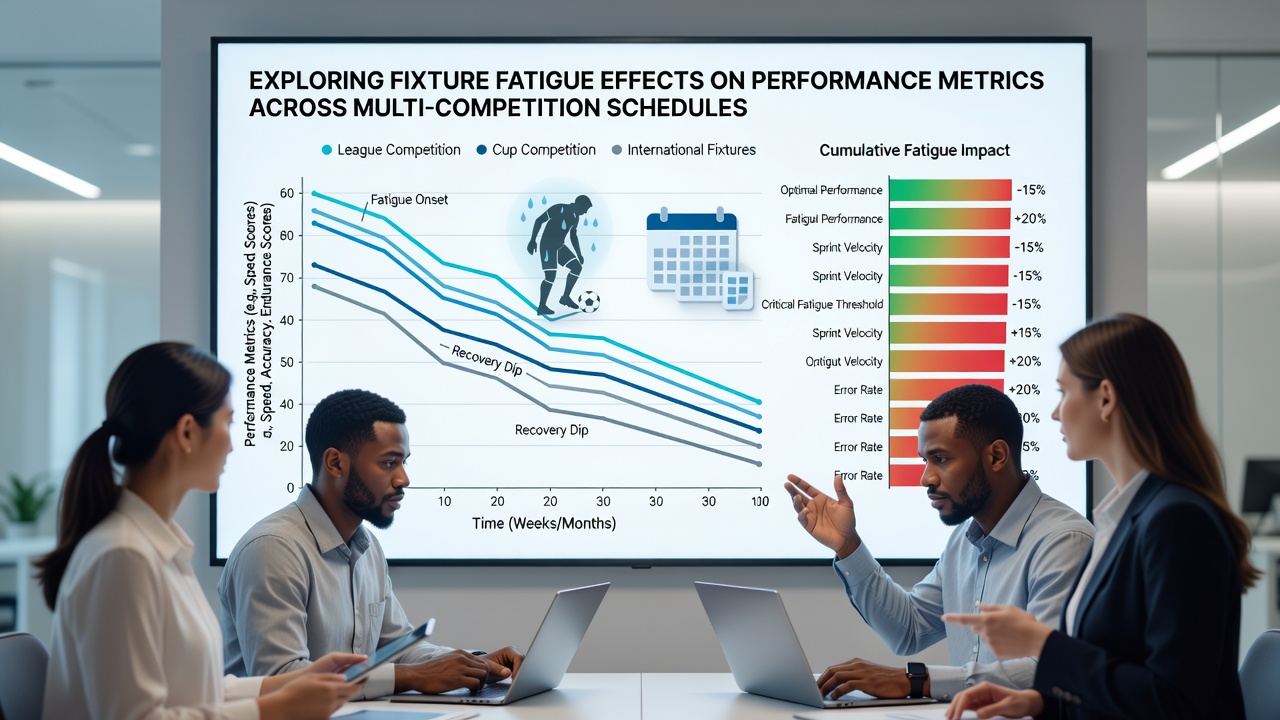
Comparative data sets reveal that domestic cup replays and two-legged European ties create the sharpest spikes in fixture density. In contrast, international breaks sometimes allow partial recovery for players not selected, although travel demands offset those gains for some national-team regulars. Regression models built by researchers at Loughborough University indicate each additional match within a fourteen-day window correlates with a 0.8 percent drop in team expected-goal differential. While the effect size appears modest in isolation, it compounds across a season and influences final league standings more than many pre-season projections anticipate.
Recovery Strategies and Scheduling Adjustments
Clubs have responded with targeted interventions such as individualized recovery protocols, rotation policies and load-management software. Some federations now trial mid-season breaks or fixture-free weekends to mitigate cumulative fatigue. Data released by the German Football League shows that teams employing structured rotation during the 2024-2025 winter period maintained higher average sprint counts into March compared with squads that relied on the same starting eleven. Meanwhile, medical staff increasingly use subjective wellness questionnaires alongside objective GPS metrics to decide which players can safely feature in quick-turnaround games.
Future Calendar Implications Through 2026 and Beyond
With the 2026 FIFA World Cup set for June and July, confederations are already mapping qualification pathways that overlap with domestic seasons. Scheduling committees face pressure to protect player welfare while satisfying broadcast and commercial stakeholders. Pilot programs in Scandinavia have tested flexible kick-off windows and reduced pre-season tournaments, yielding early evidence of stabilized performance metrics. Observers expect these experiments to inform broader policy discussions once the 2025-2026 campaign concludes and governing bodies review injury and output statistics across all competitions.
Conclusion
Performance metrics shift measurably when fixture lists become overcrowded, and governing bodies continue to examine how calendar design affects both short-term results and long-term athlete health. Continued data collection through 2026 will clarify whether current mitigation tactics scale effectively or whether structural reforms become necessary to preserve competitive balance and player availability across multiple fronts.