Altitude Effects on Player Endurance and Match Totals in High-Elevation Venues
Ulrich Hayes · Aug 19, 2026
Altitude Effects on Player Endurance and Match Totals in High-Elevation Venues
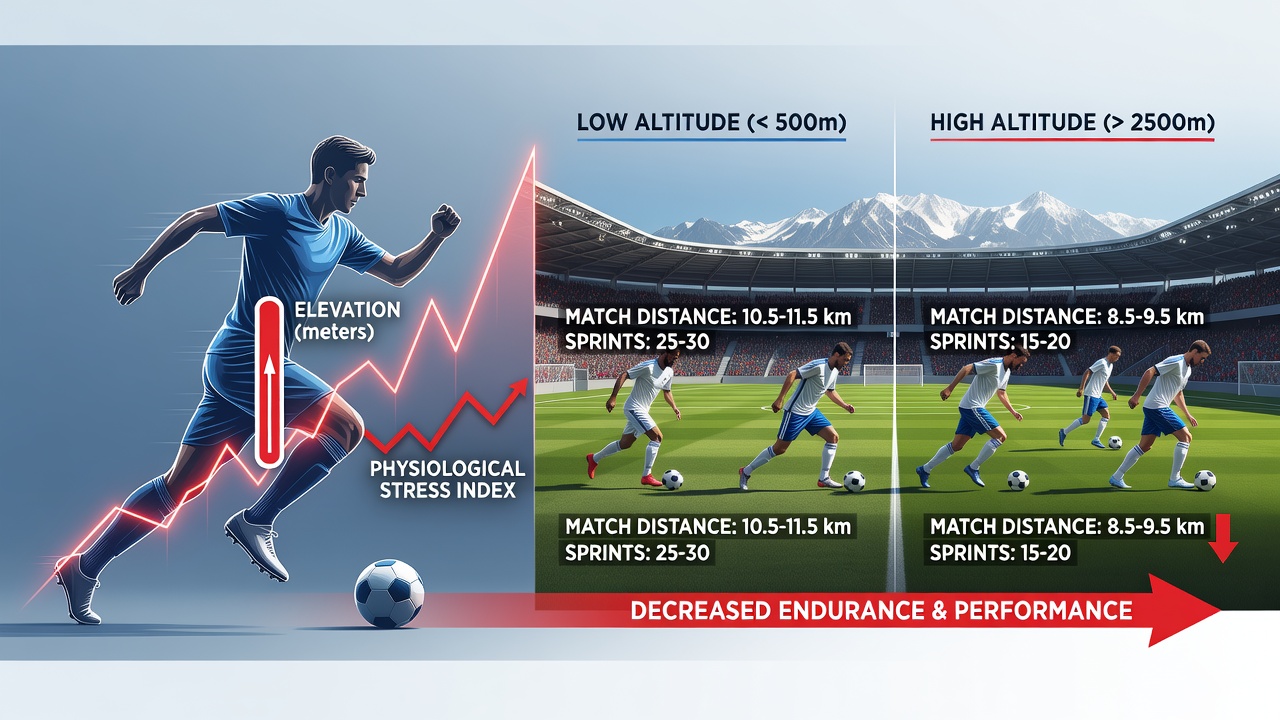
High-elevation venues create distinct challenges for athletes because reduced oxygen availability alters how the body sustains effort over time, and data from multiple competitions show measurable shifts in match statistics. Venues above 2,000 meters such as Estadio Hernando Siles in La Paz at 3,600 meters, Estadio Azteca in Mexico City at 2,240 meters, and Dick's Sporting Goods Park in Denver at 1,610 meters force the cardiovascular system to work harder to deliver oxygen to working muscles. Researchers have documented that players experience faster lactate accumulation and quicker onset of fatigue when competing at these elevations compared with sea-level conditions.
Physiological Responses at Elevation
The partial pressure of oxygen drops as altitude rises, which reduces the amount of oxygen that binds to hemoglobin in the blood. Studies indicate that maximal oxygen uptake can decline by 7 to 10 percent for every 1,000 meters gained above sea level, and this reduction directly limits the duration of high-intensity efforts. Teams arriving from lower elevations often record higher heart rates during the same running speeds, while blood-oxygen saturation levels fall more sharply during the second half of matches. Observers note that recovery intervals between sprints lengthen noticeably, and players cover less total distance in the final 30 minutes of play.
Endurance Patterns Across Competitions
Match-tracking data collected by systems used in South American and North American leagues reveal consistent endurance decrements. In Bolivian Primera División fixtures at La Paz, visiting teams from coastal regions average 8 to 12 percent less high-speed running distance after the 60-minute mark. Similar patterns appear in Mexican Liga MX games at Estadio Azteca, where squads based near sea level show elevated ratings of perceived exertion and reduced repeated-sprint ability. During the 2026 FIFA World Cup cycle, several matches scheduled in Mexico City during the group stage have prompted national federations to adjust training protocols months in advance, including pre-acclimatization camps held at intermediate altitudes.
Influence on Scoring and Match Totals
Lower endurance also correlates with changes in overall match output. Analysis of more than 300 fixtures played above 2,000 meters found that total goals per game decrease by roughly 0.3 to 0.5 on average, largely because attacking sequences shorten and defensive organization improves as fatigue sets in. However, the first 15 minutes often produce more goals than comparable sea-level matches because players start at higher intensities before oxygen debt accumulates. Statistics from CONMEBOL qualifiers show that home teams at extreme altitude convert a higher percentage of shots in the opening quarter-hour, while away sides struggle to maintain pressing intensity after the break.
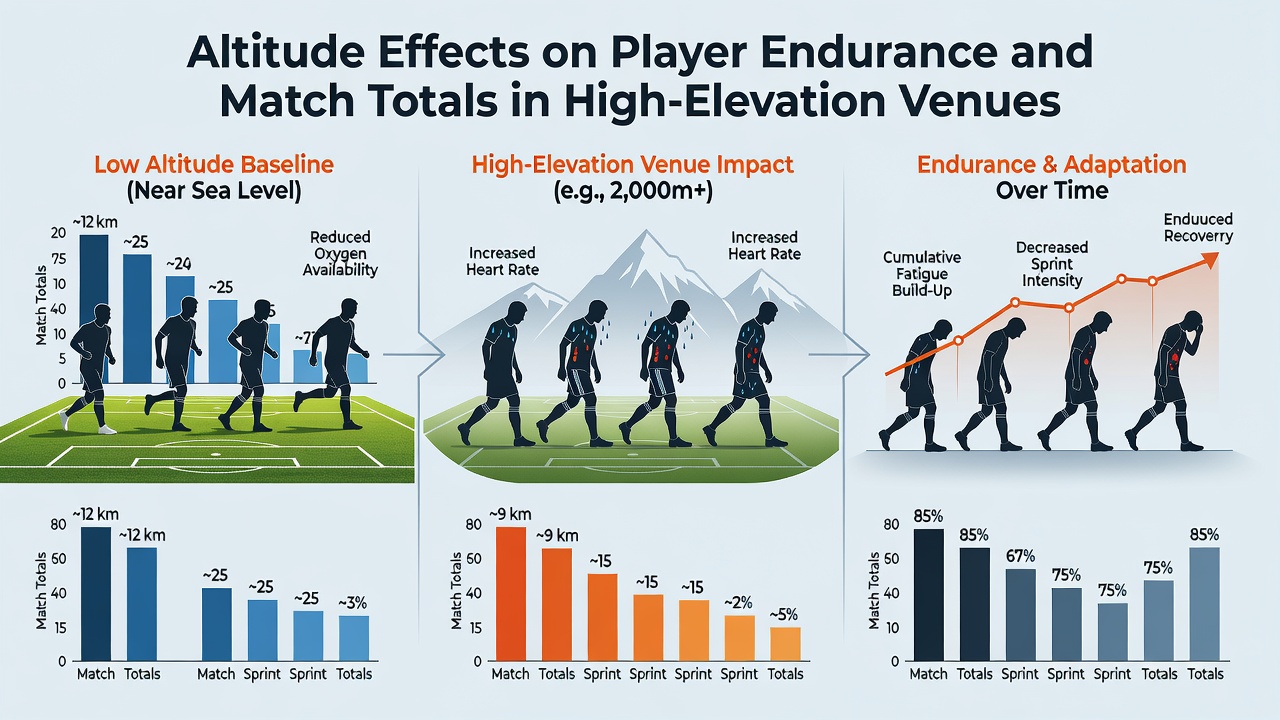
One study conducted by exercise physiologists at the University of Colorado examined collegiate soccer matches in Denver and reported that teams required an additional 48 to 72 hours of acclimatization before endurance metrics returned to baseline levels. The same research group found that substitute players introduced after the 70-minute mark covered more ground than starters who remained on the field, underscoring the cumulative effect of altitude on prolonged effort. In August 2026 several clubs preparing for international tournaments will conduct similar monitoring programs to fine-tune rotation strategies ahead of fixtures at elevated venues.
Adaptation Strategies Observed in Practice
Clubs and national teams have adopted varied approaches to mitigate altitude stress. Some squads schedule training sessions at comparable elevations weeks before travel, while others rely on altitude tents that simulate reduced oxygen environments during sleep. Data collected by the Australian Institute of Sport indicate that players who undergo 10 to 14 days of pre-exposure maintain closer to normal total distance covered and exhibit smaller drops in sprint frequency. Hydration protocols also receive emphasis because respiratory water loss increases at altitude, and dehydration further impairs endurance capacity.
Coaches adjust tactical instructions as well. Teams often adopt a lower defensive block early in matches to conserve energy and rely on quick transitions rather than sustained high pressing. Substitutions occur earlier, typically between the 60th and 70th minute, to inject fresh legs before fatigue becomes decisive. These adjustments appear in both domestic leagues and continental competitions where travel between sea-level and highland cities is routine.
Conclusion
High-elevation venues impose measurable constraints on player endurance that translate into altered match totals and strategic adaptations. Physiological data, competition statistics, and preparation protocols documented across multiple continents demonstrate that reduced oxygen availability shortens high-intensity periods, influences goal timing, and prompts changes in training and in-game management. As international calendars continue to feature fixtures at notable altitudes, teams and governing bodies maintain ongoing research into acclimatization timelines and recovery methods to address these environmental factors.